 Save
Save My grandmother used to make this cake for every milestone birthday, and I'd stand on a stool beside her watching the thin batter pour into the pans, amazed that something so liquid could transform into such a rich, fudgy masterpiece. Years later, I finally asked her for the recipe, half expecting some secret ingredient she'd been hiding. What I discovered instead was far simpler—it's all about trusting the process, especially when that boiling water goes in and everything looks impossibly loose. The first time I made it alone, I nearly threw the batter out before baking, convinced I'd made a mistake. That hesitation taught me everything about this cake: it's built on faith and heat, and the payoff is absolutely worth it.
I made this for a potluck once where I arrived late and nervous, and I'll never forget setting it down on the dessert table and watching it disappear in less than twenty minutes while I was still chatting with someone across the room. One woman actually followed me to my car asking if I'd make it for her daughter's wedding. That's when I knew this wasn't just a good cake—it was the kind of dessert that makes people feel remembered.
Ingredients
- All-purpose flour (2 cups): The foundation, and measuring by weight gives you the most reliable results—I learned this after one too many dense cakes.
- Granulated sugar (1 ¾ cups): This feeds the cake's moisture and structure, so don't skimp or substitute brown sugar here.
- Unsweetened cocoa powder (¾ cup): The soul of the cake; splurge on a quality brand because you'll taste the difference.
- Baking powder and baking soda (1 ½ teaspoons each): They work together to create that tender crumb and the slight rise that keeps the cake from being too dense.
- Salt (1 teaspoon): This small amount deepens the chocolate flavor in a way you won't consciously notice but will definitely miss if you leave it out.
- Eggs (2 large, room temperature): Room temperature eggs emulsify better and create a smoother batter—I learned to pull mine out 30 minutes before baking.
- Whole milk (1 cup, room temperature): The moisture element that keeps this cake impossibly tender; whole milk makes a real difference in richness.
- Vegetable oil (½ cup): Oil stays tender longer than butter in baked goods, which is why this cake keeps so well.
- Vanilla extract (2 teaspoons): Use real vanilla; it rounds out the chocolate in a way pure vanilla extract simply can't match.
- Boiling water (1 cup): This is the secret weapon that sounds crazy but transforms the batter into something glossy and almost fudgy before it bakes.
- Evaporated milk (1 cup, for frosting): The concentrated richness of evaporated milk is what makes this frosting different from any other—don't substitute regular milk.
- Granulated sugar (1 cup, for frosting): This sweetens and thickens the frosting as it cooks.
- Egg yolks (3 large): They emulsify the frosting and give it a silky texture that feels luxurious on the tongue.
- Unsalted butter (½ cup, cubed): Cubing it helps it melt evenly into the hot mixture without clumping.
- Vanilla extract (1 teaspoon, for frosting): This mellows the sweetness and adds a subtle warmth.
- Sweetened shredded coconut (1 ⅓ cups): The toasted sweetness of this coconut is non-negotiable; unsweetened coconut tastes grainy by comparison, though I've used it when I was trying to cut back on sugar.
- Chopped pecans (1 cup): Toasting them lightly before adding amplifies their nutty flavor, something I discovered by accident and now always do.
Tired of Takeout? 🥡
Get 10 meals you can make faster than delivery arrives. Seriously.
One email. No spam. Unsubscribe anytime.
Instructions
- Prepare your pans and preheat:
- Get your oven to 350°F and grease and flour three 9-inch round pans thoroughly—I use the butter-and-flour method, making sure to coat the sides and bottoms completely. This is where patience prevents heartbreak; a pan that's not prepped means layers that stick.
- Mix your dry ingredients:
- In a large bowl, whisk together flour, sugar, cocoa powder, baking powder, baking soda, and salt until everything is evenly combined and there are no streaks of cocoa powder hiding at the bottom. This whisking matters because it helps distribute the leavening agents evenly.
- Bring it together:
- Add your room-temperature eggs, milk, oil, and vanilla to the dry mixture and beat on medium speed for exactly 2 minutes—this develops the gluten just enough to give the cake structure without making it tough. The batter should look creamy and homogenous, not grainy or lumpy.
- Add the magic ingredient:
- Stir in the boiling water carefully; the batter will become thin and almost pourable, which looks wrong but is absolutely right. This thin batter is what creates that moist, fudgy crumb that makes this cake so special.
- Fill and bake:
- Divide the batter evenly among the three prepared pans and slide them into the oven. Bake for 30 to 35 minutes until a toothpick inserted into the center comes out clean or with just a few moist crumbs clinging to it—don't overbake, as this cake continues to set as it cools.
- Cool with care:
- Let the cakes sit in their pans for 10 minutes to set up slightly, then turn them out onto wire racks to cool completely. This 10-minute rest prevents the layers from breaking apart.
- Make the frosting:
- In a medium saucepan, whisk together evaporated milk, sugar, egg yolks, and butter over medium heat, stirring constantly for about 12 minutes until the mixture thickens enough to coat the back of a spoon. Watch the heat carefully—too high and the eggs will scramble; too low and it won't thicken.
- Finish the frosting:
- Remove from heat and stir in vanilla, coconut, and pecans, then let it cool for about 30 minutes until it reaches a spreadable consistency. As it cools, the frosting will thicken beautifully and become easier to work with.
- Assemble your masterpiece:
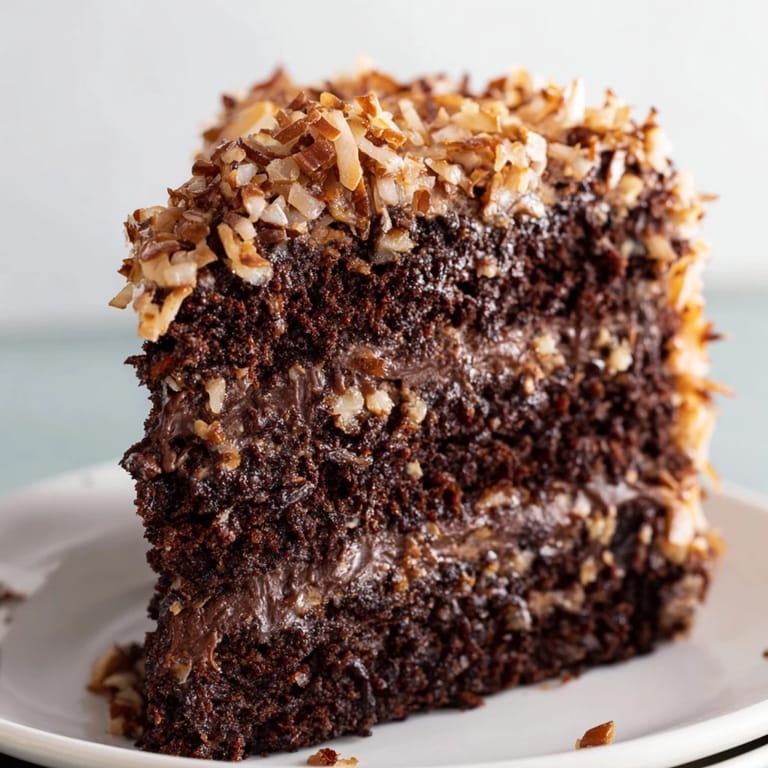
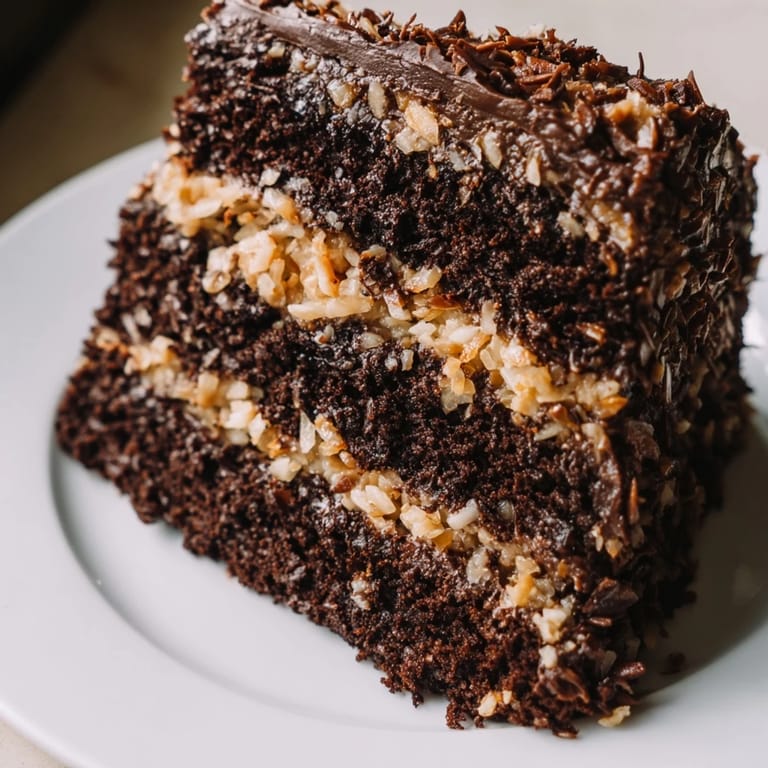
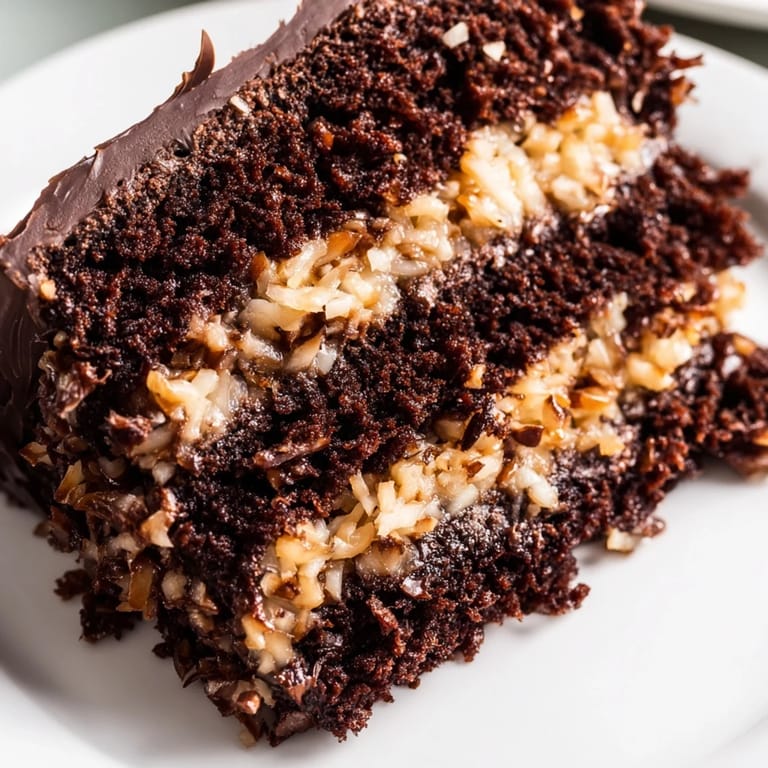
- Place the first cake layer on your serving plate, spread about a third of the frosting over the top, then repeat with the remaining layers, finishing with frosting on top. Frost the sides if you're feeling generous—this cake looks stunning with that generous coconut coating visible from all angles.
 Save
Save I remember my friend Sarah taking one bite at a dinner party and closing her eyes like she'd tasted something precious, then quietly asking if I could teach her to make it. We made it together the following Sunday, and watching her understand why the batter looked so loose, and then seeing that understanding turn into confidence as the cake came out perfect, reminded me that good recipes are really just permission to do something delicious for someone you care about.
Storage and Keeping
This cake actually improves over a day or two as the layers absorb moisture from the frosting and settle into each other, so there's no rush to eat it all at once. Keep it covered at room temperature for up to 2 days, or refrigerate it for longer—just pull it out an hour before serving so the frosting softens back to its best texture.
Customizing Your Cake
One of the joys of this recipe is how forgiving it is to little changes that make it your own. I've drizzled melted dark chocolate over the top for an extra touch of elegance, swapped pecans for walnuts when that's what I had on hand, and even toasted the coconut lightly in a dry pan before adding it to the frosting for deeper flavor. The cake itself is sturdy enough to handle these variations without falling apart.
Why This Cake Works
German chocolate cake succeeds because it respects the tension between richness and moisture—the oil in the batter keeps it tender, the boiling water keeps it moist, and the frosting is thick enough to support three layers without weeping. It's a lesson in balance that works just as well in baking as it does in life.
- Make sure all your ingredients are truly at room temperature before you start mixing, especially the eggs and milk.
- If you don't have three round pans, you can bake this in two pans and split the layers, or even make it in a 9x13 rectangular pan and serve it more casually.
- The frosting contains raw egg yolks, so use only the freshest eggs from a trusted source, or substitute with pasteurized eggs if that makes you more comfortable.
 Save
Save This cake is worth the effort, and once you've made it once, it becomes the recipe you reach for when you want to say something important with dessert. Make it, share it, and let it become part of your kitchen story the way it's become part of mine.
Recipe Questions & Answers
- → What makes the frosting unique in this cake?
The frosting combines evaporated milk, egg yolks, butter, shredded coconut, and pecans, creating a creamy, sweet, and nutty topping that sets it apart from typical frostings.
- → How do I ensure the cake stays moist?
Using boiling water in the batter helps to bloom the cocoa powder, resulting in a moist and tender crumb. Also, avoid overbaking and cool the cake properly.
- → Can I store the finished cake at room temperature?
Yes, the cake can be stored covered at room temperature for up to two days. For longer freshness, refrigeration is recommended.
- → Are substitutions available for shredded coconut?
Unsweetened shredded coconut can be used for a less sweet frosting without compromising texture and flavor.
- → What tools are needed to prepare this cake?
You will need three 9-inch round pans, mixing bowls, an electric mixer, a saucepan, a whisk, a spatula, and wire racks for cooling.