 Save
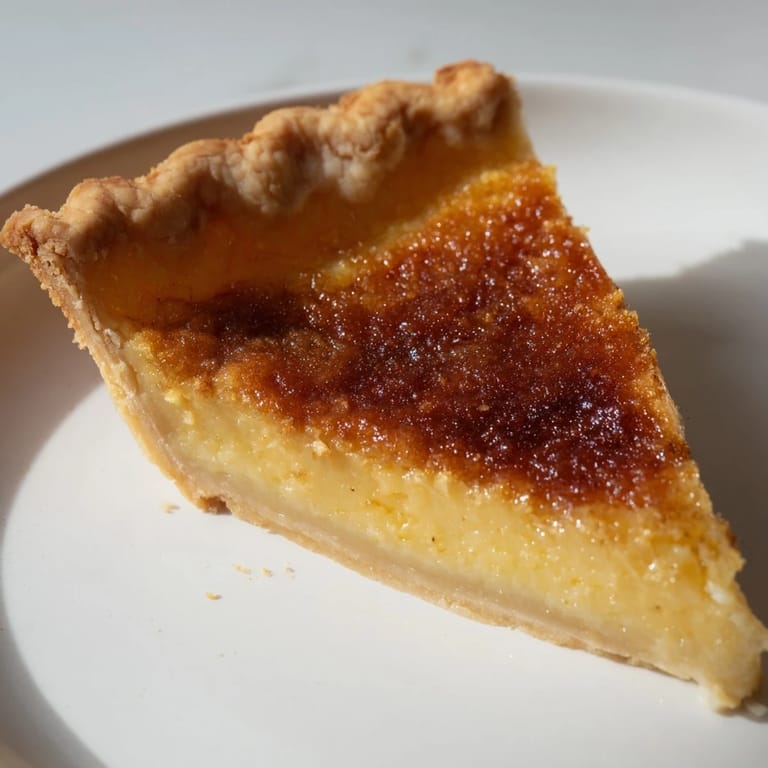
Save I pulled this pie from the oven on a sticky July afternoon, and the whole kitchen smelled like butter and caramelized sugar. My grandmother used to say chess pie was born from making do with what you had, no fancy fillings, just eggs, sugar, and a little cornmeal to hold it all together. The top cracked just slightly as it cooled, which she always said meant it was honest. I served it that night still warm, and no one asked what made it special, they just came back for seconds.
The first time I made this for a potluck, I almost didn't bring it because it seemed too plain. But when I set it on the table, people kept circling back, asking what was in it, like there had to be some secret. There wasn't, just butter and eggs and a little bit of patience. One friend told me it reminded her of her childhood in Tennessee, and I realized some recipes don't need to be complicated to mean something.
Ingredients
- Unbaked 9 inch pie crust: You can use homemade or store bought, but make sure it's cold when you fill it so the edges stay crisp.
- Granulated sugar: This is the backbone of the filling, it melts into the butter and eggs to create that signature sweetness.
- Unsalted butter, melted and cooled: Let it cool before whisking or the eggs will scramble, I learned that the hard way once.
- Large eggs: They give the pie its custardy texture, make sure they're at room temperature for smoother mixing.
- Cornmeal: Just a tablespoon adds a subtle grit and structure, it's what makes chess pie different from custard.
- All purpose flour: A small amount helps the filling set without making it cakey.
- Salt: Balances the sweetness and makes everything taste more like itself.
- Whole milk: Adds richness and helps the filling pour smoothly into the crust.
- Vanilla extract: A teaspoon is enough to round out the flavor without overpowering the buttery simplicity.
- White vinegar (optional): It sounds strange, but it adds a tiny brightness that keeps the pie from feeling too heavy.
Tired of Takeout? 🥡
Get 10 meals you can make faster than delivery arrives. Seriously.
One email. No spam. Unsubscribe anytime.
Instructions
- Preheat and Prep:
- Set your oven to 350°F and let it come to temperature while you prepare the crust. Press the unbaked crust into a 9 inch pie dish and crimp the edges however you like, no need for perfection here.
- Mix the Filling:
- In a large bowl, whisk together the sugar, melted butter, eggs, cornmeal, flour, and salt until it's smooth and no streaks remain. Add the milk, vanilla, and vinegar if using, then whisk until the mixture looks silky and pourable.
- Fill and Bake:
- Pour the filling into the prepared crust, it should come up near the top but not overflow. Bake for 45 to 50 minutes, the center will still jiggle slightly but the top should be golden and just set.
- Cool Completely:
- Remove the pie from the oven and place it on a wire rack. Let it cool all the way to room temperature before slicing, this helps the filling firm up and makes cleaner slices.
 Save
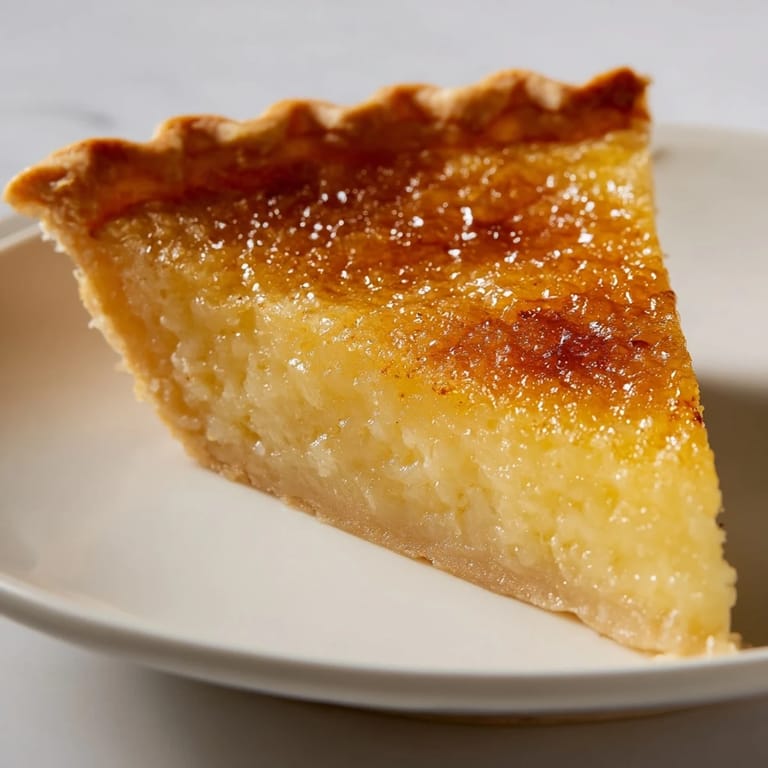
Save I remember slicing into this pie for the first time and watching the filling hold its shape, smooth and golden all the way through. My neighbor took one bite and said it tasted like her childhood in Georgia, which made me realize some desserts don't need chocolate or layers to be memorable. It just needs to be honest, sweet, and made with care.
What Makes Chess Pie Different
Chess pie sits somewhere between custard and sugar pie, with a texture that's denser than flan but softer than pecan pie without the nuts. The cornmeal is what sets it apart, giving the filling a slight grainy comfort that feels rustic and intentional. Some say the name comes from pie chest, where it was stored because it didn't need refrigeration, others think it's just a Southern way of saying it's just pie, nothing fancy.
Serving Suggestions
I like to serve this pie barely warm with a handful of fresh blackberries on the side, the tartness cuts through the sweetness perfectly. Whipped cream is always welcome, especially if you whip it yourself with a little vanilla and a pinch of sugar. On cooler evenings, a scoop of vanilla ice cream melting into the warm filling is the kind of comfort that doesn't need explaining.
Storage and Make Ahead Tips
This pie keeps surprisingly well at room temperature for up to two days, covered loosely with foil or plastic wrap. If your kitchen is warm or humid, you can refrigerate it, but let it come back to room temperature before serving for the best texture. You can bake the crust a day ahead and store it wrapped tightly, then make the filling fresh and pour it in right before baking.
- Wrap leftovers tightly and store at room temperature for up to 48 hours.
- Refrigerate if needed, but warm slices gently in the oven before serving.
- The pie can be frozen whole for up to a month, thaw overnight in the fridge.
 Save
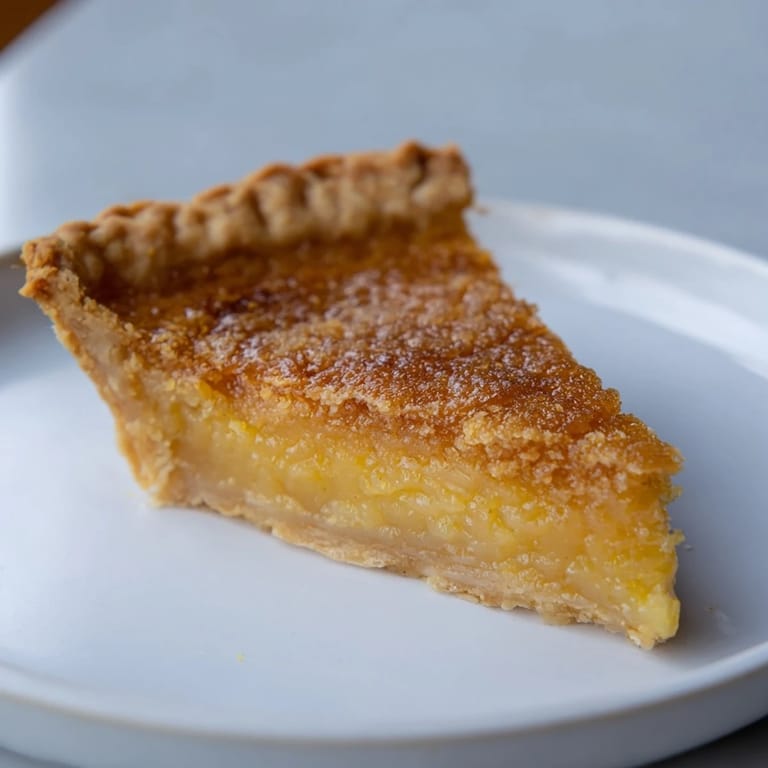
Save This pie doesn't ask for much, just a little time and ingredients you probably already have. Every time I make it, I'm reminded that the best desserts are often the simplest ones, the ones that taste like home without trying too hard.
Recipe Questions & Answers
- → What gives the custard its golden top?
The golden top comes from the sugary topping caramelizing during baking, creating a slightly crisp and shiny surface.
- → Can I use a store-bought crust for this custard?
Yes, a pre-made 9-inch pie crust works well and saves time without affecting the final texture.
- → What is the purpose of the vinegar in the filling?
The vinegar adds subtle brightness and balances the richness of the butter and eggs in the custard.
- → How do I know when the custard is done baking?
The center should be just set but still slightly jiggly; it will firm up as it cools, ensuring a creamy texture.
- → Are there any suggested variations for the filling?
You can add a pinch of nutmeg or lemon zest to introduce warm or citrusy notes to the custard.