 Save
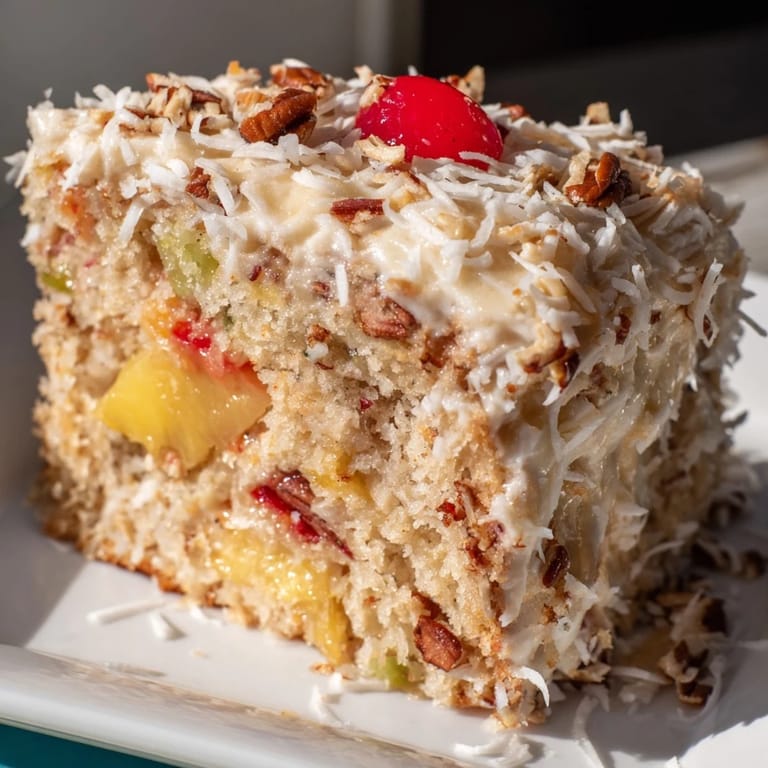
Save There's something almost magical about opening a can of fruit cocktail and watching those jeweled pieces tumble into a mixing bowl—it takes me back to my grandmother's kitchen on lazy summer afternoons when she'd whip this cake together without a single recipe card, just muscle memory and a smile. The way the fruit's own juice soaks into the cake layers, making everything impossibly moist, felt like her secret weapon for impressing people without fussing. I've made it dozens of times since, and it never fails to remind me that sometimes the simplest ingredients create the most memorable desserts.
I made this cake for my coworker's birthday potluck once, nervous it seemed too simple, too retro—but watching people go back for thirds while the frosting was still slightly warm made me realize that comfort and deliciousness don't need to be complicated. One colleague asked for the recipe that same day, and I knew I'd found something worth keeping in steady rotation.
Ingredients
- All-purpose flour: The foundation that holds everything together; don't sift unless your flour has been sitting unopened for a year.
- Granulated sugar: Use the regular stuff, not superfine, because the texture of the cake depends on it.
- Large eggs: Room temperature makes a difference in how smoothly they blend with the wet ingredients.
- Canned fruit cocktail in juice: The juice-to-fruit ratio is everything; don't drain it or you'll lose the moisture that makes this cake sing.
- Baking soda: It reacts with the fruit juice's acidity to give the cake its tender crumb.
- Salt: A small amount that you won't taste but that makes the sweetness feel balanced.
- Vanilla extract: The kind you actually enjoy smelling makes a noticeable difference.
- Granulated sugar for frosting: This becomes silky and caramel-tinged as it cooks with the butter and milk.
- Whole milk: Half and half would make it richer, but whole milk is the classic choice for a reason.
- Unsalted butter: You control the salt this way; salted butter can throw off the frosting balance.
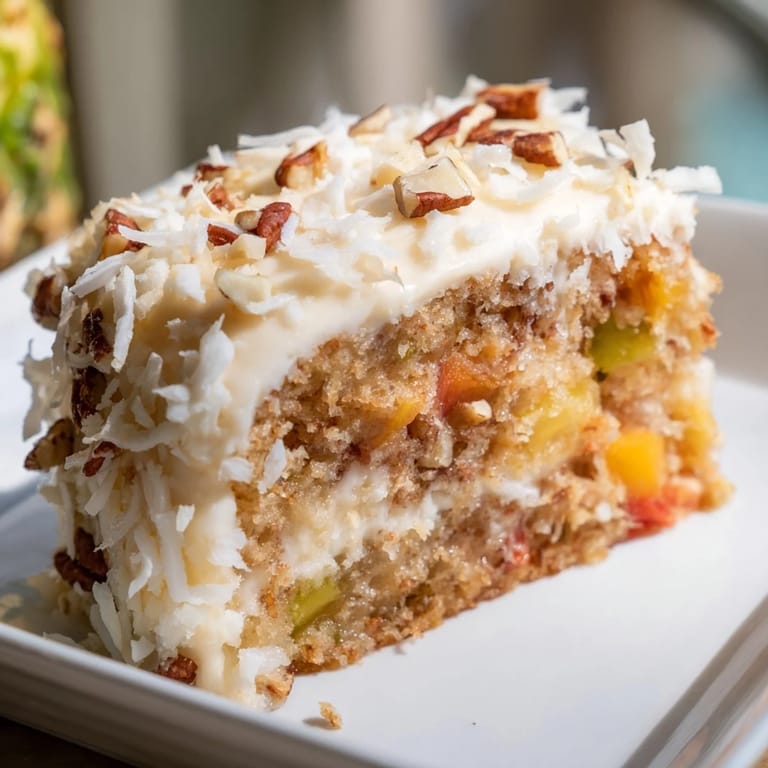
- Sweetened shredded coconut: Buy it fresh if you can, or at least check that it hasn't been sitting in your pantry for a year absorbing kitchen smells.
- Chopped pecans or walnuts: Optional, but they add a textural contrast that makes the frosting feel less one-note.
Tired of Takeout? 🥡
Get 10 meals you can make faster than delivery arrives. Seriously.
One email. No spam. Unsubscribe anytime.
Instructions
- Set the stage:
- Preheat your oven to 350°F and grease a 9x13-inch pan thoroughly; cold pans are your enemy here. Butter or cooking spray works equally well, but make sure you get into the corners.
- Mix the dry foundation:
- Whisk together flour, sugar, baking soda, and salt in a large bowl until they're evenly distributed. This matters more than you'd think because it helps everything hydrate at the same pace.
- Combine with the fruit:
- Add your eggs, the entire can of fruit cocktail with its juice, and vanilla extract to the dry mixture. Stir gently until just combined—you want some small flour streaks still visible, not a uniform batter, because overmixing toughens the cake.
- Into the pan:
- Pour the batter into your prepared pan and use an offset spatula or the back of a spoon to spread it evenly. Don't stress about perfect smoothness; it'll level itself as it bakes.
- Bake until golden:
- Slide it into the oven and bake for 30 to 35 minutes, checking at the 30-minute mark with a toothpick. When the toothpick comes out clean with maybe one tiny crumb clinging to it, you're done.
- Make the frosting magic:
- While the cake bakes, combine sugar, milk, and butter in a saucepan over medium heat. Stir occasionally as it comes to a gentle boil; you'll know it's ready when it smells like butterscotch and the sugar has fully dissolved.
- Toast the coconut:
- Remove the pan from heat and immediately stir in coconut, nuts if you're using them, and vanilla. The residual heat will toast the coconut slightly, intensifying its flavor.
- The crucial moment:
- The second your cake emerges from the oven, take a fork or skewer and poke holes all over the surface—don't be timid, aim for every square inch. This is what lets the warm frosting sink in and create that impossibly moist texture.
- Frost while hot:
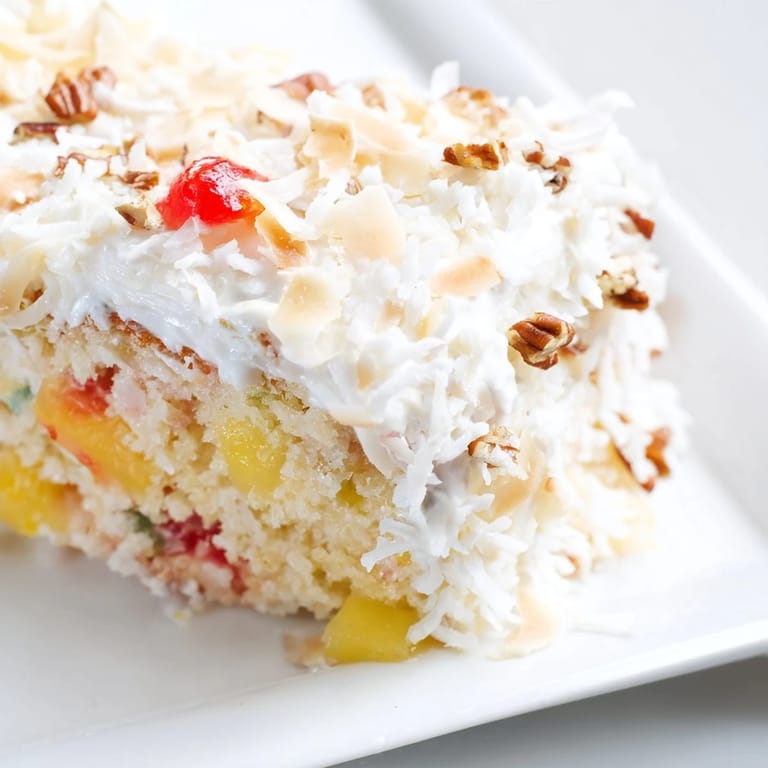
- Pour the frosting slowly over the warm cake, letting it seep into those holes. The warmth is essential; pour it too cold and it'll sit on top instead of soaking in.
- Cool and serve:
- Let the cake cool in the pan at room temperature, which takes a couple of hours. Serve it warm, at room temperature, or even chilled—it's forgiving that way.
 Save
Save There was an evening when my daughter took her first bite of this cake and asked if I'd made it from scratch, seeming almost disappointed when I explained the canned fruit ingredient—until she tasted that frosting and understood that from-scratch doesn't mean complicated. That moment shifted something for me about what matters in cooking.
When to Make This Cake
This is the cake for when you want something homemade but you're not interested in being a hero about it. Potlucks, casual dinners, Sunday afternoons when you want dessert without a fussy project—this is your answer. The simplicity is actually its strength, because you can make it with confidence and focus on what really matters: spending time with people instead of stressing over technique.
Storage and Keeping
The cake stays moist and lovely in a covered container at room temperature for three days, which is frankly longer than it usually lasts in my house. You can refrigerate it for up to a week if you need to, though the frosting firms up slightly and loses a bit of its silky quality. It doesn't freeze beautifully because of the frosting, so it's best eaten fresh while that texture is at its peak.
Variations Worth Trying
Once you make this once, you'll start seeing possibilities everywhere. The fruit cocktail is forgiving enough that you could substitute crushed pineapple or even a homemade fruit compote if you wanted to go rogue. The coconut frosting is equally flexible—I've added a pinch of almond extract once and couldn't stop thinking about it for days.
- Try coconut milk instead of whole milk in the frosting for a deeper, more complex flavor.
- Substitute chopped pistachios for the pecans if you want a color and flavor surprise.
- Toast the coconut briefly in a dry skillet before stirring it into the frosting for nuttier depth.
 Save
Save This cake has taught me that the best recipes aren't always the fanciest ones—they're the ones you actually make, that bring people together, and that taste like care. Make it with ease.
Recipe Questions & Answers
- → What gives the cake its moist texture?
The undrained canned fruit cocktail adds moisture and sweetness, keeping the cake tender.
- → Can I omit nuts in the frosting?
Yes, nuts are optional and can be left out for a nut-free topping without affecting flavor.
- → How is the coconut frosting prepared?
Sugar, milk, and butter are boiled gently, then shredded coconut, nuts, and vanilla are stirred in to create a creamy frosting.
- → What pan size is best for baking this cake?
A 9x13-inch baking pan ensures even cooking and the right thickness for moist results.
- → Can coconut milk be used instead of whole milk?
Yes, substituting coconut milk intensifies the coconut flavor in the frosting.