 Save
Save My neighbor Rosa used to make these every Sunday, and the smell would drift through the hallway and pull me right to her door. She'd laugh and hand me one still warm, the sauce clinging to the sides. I started making them myself after she moved back to Palermo, using the scribbled recipe she left on a napkin. Now every time I tie up those little rolls, I think of her kitchen and the way she'd hum while she cooked.
I made these for my in-laws the first time they visited, nervously hoping the rolls wouldn't fall apart in the pan. They held together beautifully, and my father-in-law, who grew up in Sicily, nodded quietly and asked for seconds. That nod meant more than any compliment ever could. Since then, braciole has become my go-to for when I want to show someone I care without saying much at all.
Ingredients
- Beef top round or flank steak: Thin slices are essential so they roll easily and cook tender, I pound mine gently if they're thicker than a quarter inch.
- Pecorino cheese: The sharpness cuts through the richness of the beef and adds a salty backbone to the filling, Parmigiano works in a pinch but pecorino is traditional.
- Pine nuts: Toasting them for just a few minutes in a dry pan brings out a buttery sweetness that balances the raisins perfectly.
- Raisins: They plump up as the braciole simmers and add little pockets of sweetness that surprise you with every bite.
- Fresh parsley and basil: Brightness is key here, dried herbs won't give you the same fresh lift against all that richness.
- Garlic: Minced fine so it melts into the filling rather than biting back, I learned that the hard way once.
- Breadcrumbs: They soak up the juices and help bind everything together so the filling doesn't spill out when you slice.
- Crushed tomatoes: San Marzano if you can find them, their sweetness and low acidity make a sauce that doesn't need much help.
- Dry red wine: A splash deepens the sauce and adds a subtle complexity, but if you skip it the dish still shines.
- Dried oregano: Just a teaspoon is enough, it whispers rather than shouts and lets the other flavors come forward.
Tired of Takeout? 🥡
Get 10 meals you can make faster than delivery arrives. Seriously.
One email. No spam. Unsubscribe anytime.
Instructions
- Prepare the beef:
- Lay each slice flat on a cutting board and pound gently with a meat mallet until even and thin, then season both sides with salt and pepper. This step makes rolling so much easier and ensures the meat cooks evenly.
- Make the filling:
- Combine the pecorino, toasted pine nuts, raisins, parsley, basil, garlic, and breadcrumbs in a bowl, mixing until everything is evenly distributed. The filling should look generous and smell incredible.
- Roll the braciole:
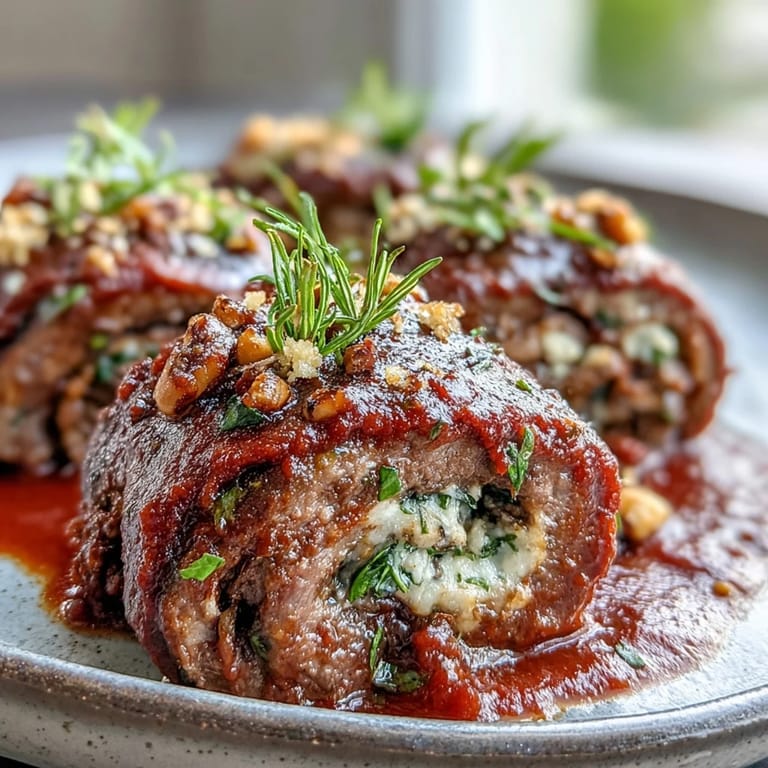
- Spoon the filling onto each beef slice, leaving a small border, then roll tightly from one end, tucking in the sides as you go, and secure with kitchen twine or toothpicks. Don't overstuff or they'll burst open in the pan.
- Sear the rolls:
- Heat olive oil in a large skillet over medium-high heat and brown the braciole on all sides until deeply golden, about 6 to 8 minutes total. This builds flavor into the sauce and gives the beef a beautiful crust.
- Build the sauce base:
- In the same skillet, sauté the chopped onion until soft and translucent, then add the garlic and cook just until fragrant, about one minute. Be careful not to burn the garlic or it'll turn bitter.
- Deglaze and simmer:
- Pour in the red wine if using and let it bubble and reduce by half, scraping up all the browned bits stuck to the pan. Then add the crushed tomatoes, oregano, salt, pepper, and a pinch of sugar if your tomatoes taste sharp.
- Braise the braciole:
- Nestle the seared rolls back into the sauce, cover the skillet, and let everything simmer gently over low heat for about an hour and fifteen minutes, turning the rolls occasionally. The beef will become melt-in-your-mouth tender and the sauce will thicken beautifully.
- Finish and serve:
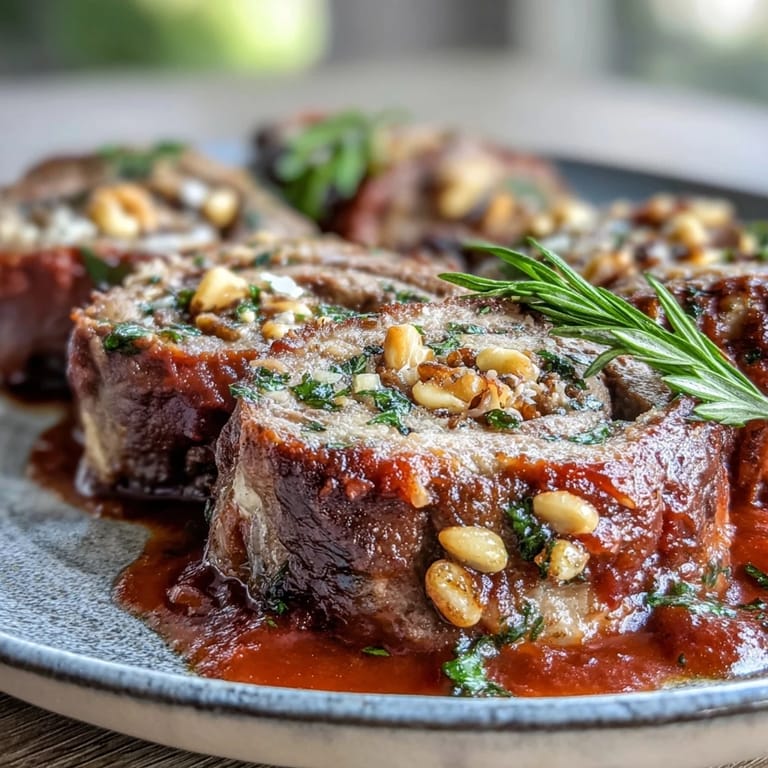
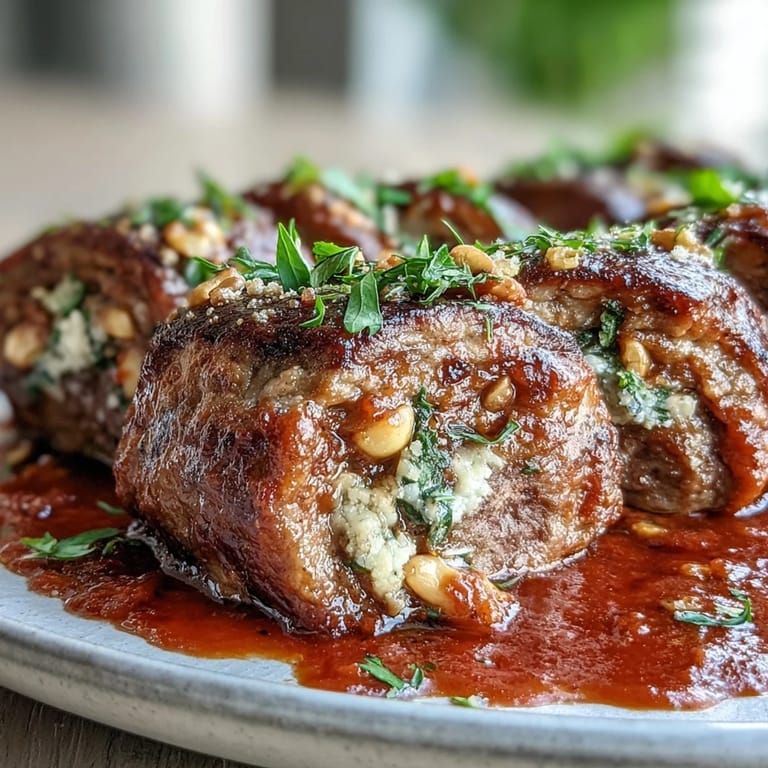
- Remove the braciole from the sauce, snip off the twine or pull out the toothpicks, and slice each roll into thick rounds. Spoon the rich tomato sauce over the top and serve immediately.
 Save
Save One winter evening I made a double batch and froze half, thinking I'd save it for a busy week. Two days later my sister called in tears over a breakup, so I thawed them and brought dinner to her apartment. We ate straight from the pot with forks and bread, and she said it tasted like being taken care of. That's when I realized braciole isn't just food, it's a way of saying I'm here without having to find the words.
Serving Suggestions
I love serving braciole over a mound of buttered pasta, letting the sauce coat every strand. Polenta is another beautiful option, creamy and mild, it soaks up the tomato sauce like a dream. Sometimes I just tear off chunks of crusty bread and let everyone mop up their plates, which feels more honest and satisfying than anything fancy.
Storage and Reheating
Braciole keeps beautifully in the fridge for up to three days, and honestly it tastes even better the next day after the flavors have had time to settle into each other. Reheat gently on the stovetop with a splash of water or broth to loosen the sauce, or cover and warm in a low oven. If you freeze them, let them thaw overnight in the fridge before reheating so they stay tender.
Variations and Customizations
Rosa used to tuck a wedge of hard-boiled egg into the center of each roll, which added richness and a pop of yellow when you sliced them. Some cooks add a thin slice of prosciutto to the filling for extra saltiness and depth. You can also swap the raisins for chopped dried apricots if you want a slightly different sweetness, or leave them out entirely if you prefer a more savory profile.
- Try adding a handful of fresh spinach to the filling for color and a bit of earthiness.
- Use veal or pork cutlets instead of beef for a lighter, more delicate version.
- Finish the sauce with a handful of fresh basil just before serving for a bright, herbaceous note.
 Save
Save Every time I make these, I'm reminded that the best recipes aren't just about feeding people, they're about creating moments worth remembering. I hope this one finds a place at your table too.
Recipe Questions & Answers
- → What cut of beef works best for braciole?
Thin slices of beef top round or flank steak work perfectly. These cuts become tender when braised and are easy to pound thin and roll with filling.
- → Can I prepare braciole ahead of time?
Yes, you can assemble the rolls up to 24 hours in advance and refrigerate. You can also make the entire dish ahead and reheat gently in the sauce before serving.
- → What can I substitute for pecorino cheese?
Parmesan or Romano cheese make excellent substitutes. Each provides a similar sharp, salty flavor that complements the sweet raisins and pine nuts.
- → How do I prevent the rolls from falling apart during cooking?
Secure them tightly with kitchen twine or toothpicks, and don't skip the searing step. The browned exterior helps hold everything together during the gentle simmering.
- → What should I serve with braciole?
Traditional accompaniments include pasta, creamy polenta, or crusty Italian bread to soak up the delicious tomato sauce. A simple green salad balances the richness.
- → Can I use white wine instead of red?
Yes, dry white wine works well too. It adds acidity and depth without the robustness of red wine. You can also omit wine entirely and use a splash of broth.