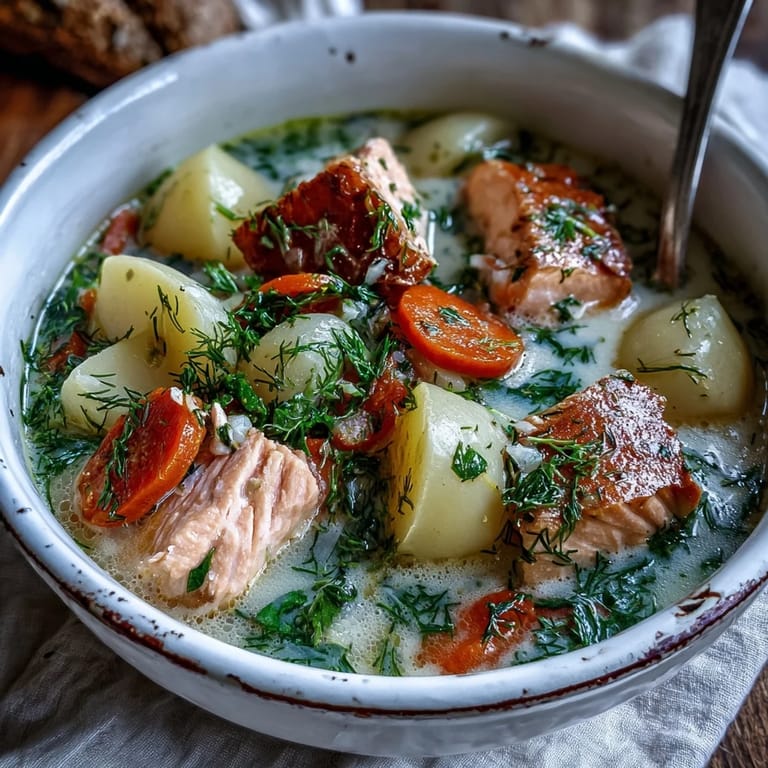
 Save
Save The first time I tried Lohikeitto was in a tiny harbor cafe in Helsinki where the windows were fogged up from the cold Baltic air. The warmth from the bowl felt like a heavy woolen blanket for my insides. It was surprisingly simple yet tasted like a luxury I did not deserve on a Tuesday. I realized then that cream and dill are a match made in heaven. Now I make it whenever the sky looks a bit too grey.
I remember my first attempt at home where I overcooked the salmon until it was tough, which was a mistake I never made again. I learned to watch for that perfect moment when the pink turns just opaque. Standing over the pot the smell of fresh dill always reminds me of summer gardens even in the dead of winter. It is a dish that invites you to slow down and actually taste your food. My family now asks for it every time the first frost hits the grass.
Ingredients
- Salmon Fillet: Make sure it is skinless so every spoonful is effortless and soft.
- Potatoes: Waxy varieties work best here because they hold their shape instead of turning into mush.
- Leeks: Using the white and light green parts adds a subtle sweetness that regular onions just cannot match.
- Fresh Dill: Do not even think about using the dried stuff because the fresh herb provides that essential grassy punch.
- Heavy Cream: This is what transforms a simple broth into a luxurious and velvety experience.
- White Pepper: It provides a gentle heat that does not overwhelm the delicate flavor of the fish.
Tired of Takeout? 🥡
Get 10 meals you can make faster than delivery arrives. Seriously.
One email. No spam. Unsubscribe anytime.
Instructions
- Softening the aromatics:
- Melt the butter and let the leeks and onions dance in the pot until they are translucent and fragrant. Do not let them brown because you want the soup to remain bright and clean.
- Simmering the base:
- Pour in the stock and let the potatoes and carrots bubble away until they are almost tender enough to eat. This creates the flavorful foundation that will soon carry the salmon.
- Poaching the salmon:
- Drop the fish cubes in gently and let them simmer just until they lose their translucency. It only takes 5 to 6 minutes for the salmon to become buttery and flake apart.
- Finishing with cream:
- Stir in the heavy cream and a mountain of dill to bring everything together into a rich harmony. Keep the heat low to avoid boiling the cream which could cause it to separate.
 Save
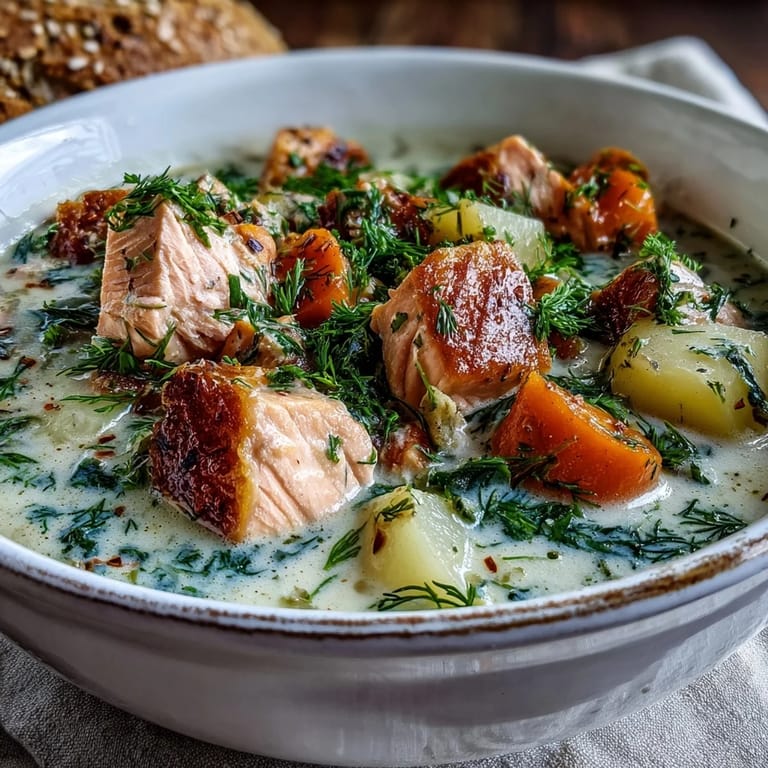
Save There was a night when a friend came over feeling quite under the weather and I served this soup with a thick slice of rye bread. We sat in the kitchen for an hour just talking while the steam rose from our bowls. By the time we finished the mood had completely shifted from gloomy to peaceful. It is remarkable how a few simple ingredients can mend a bad day.
The Secret of the Stock
I have found that using a high quality fish stock makes a world of difference in the final depth of flavor. If you cannot find good stock water with a bit of extra butter is actually better than a salty bouillon cube. I often save the trimmings from my vegetables to simmer alongside the potatoes for an extra boost. It is these small choices that turn a basic soup into a signature dish.
Texture is Everything
The way you cut the vegetables matters just as much as the seasoning. I like to keep the potato cubes small so they fit perfectly on a spoon with a piece of salmon. If the pieces are too large the ratio of fish to potato feels unbalanced. Aim for uniform sizes to ensure everything cooks at exactly the same rate.
Serving the Nordic Way
This soup is traditionally served with a side of dense dark rye bread which provides a wonderful contrast to the creamy broth. I love to spread a bit of salted butter on the bread and dip it right into the soup. It is a hearty meal that leaves you feeling satisfied but never heavy.
- Top each bowl with an extra sprig of dill for a pop of color.
- A squeeze of lemon can brighten the flavors if the soup feels too rich.
- Store leftovers in the fridge for a day but reheat very gently.
 Save
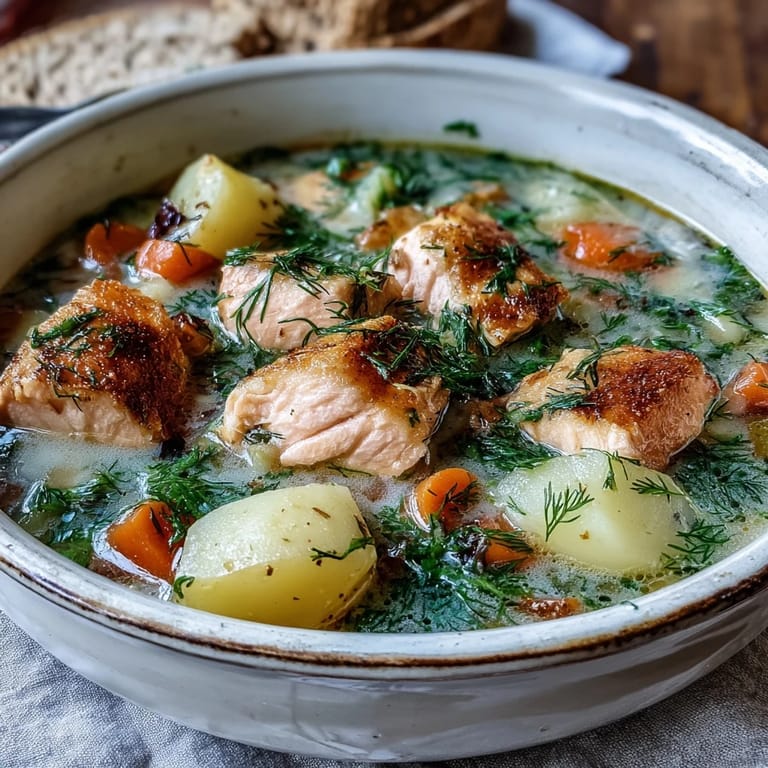
Save May your kitchen be filled with the bright scent of dill and the warmth of a steaming bowl. Enjoy every spoonful of this Nordic treasure.
Recipe Questions & Answers
- → What makes Finnish salmon soup different from other fish soups?
The combination of heavy cream, fresh dill, and white pepper creates the distinctive Finnish flavor profile. The broth remains light yet creamy, allowing the salmon to shine without being overwhelmed.
- → Can I use frozen salmon for this soup?
Fresh salmon works best, but frozen can be used if thawed completely and patted dry. The texture may be slightly less firm, but the flavor remains excellent.
- → What's the best way to prevent the salmon from overcooking?
Add salmon cubes during the last 5-6 minutes of simmering. The fish is done when it turns opaque and flakes easily. Avoid boiling vigorously, as this breaks up the delicate pieces.
- → Can I make this soup ahead of time?
The soup keeps well for 2-3 days refrigerated. However, add fresh dill and cream just before reheating for best flavor and texture. Reheat gently over low heat.
- → What should I serve with Finnish salmon soup?
Traditional rye bread or crispbread are classic accompaniments. A simple green salad with vinaigrette balances the richness. Pickled vegetables also complement the creamy flavors beautifully.
- → Is this soup suitable for gluten-free diets?
Yes, when made with water or gluten-free fish stock. Always check store-bought stock labels if avoiding gluten. Serve with gluten-free bread alternatives.