 Save
Save My neighbor Sarah handed me a basket of dandelion petals one April morning, insisting I do something with them besides letting them go to seed. I'd never thought of dandelions as anything but yard nuisances until she mentioned her grandmother's spring brunches featured them in everything—and that's when I started playing with scones. The first batch was a revelation: those delicate yellow petals folded into tender dough, their subtle floral sweetness balanced perfectly by honey, made me understand why she'd been so excited.
I made these for a small garden party last May, and my friend Emma literally closed her eyes on her first bite—not in a polite way, but in genuine surprise. She'd expected regular scones dressed up, but instead found something entirely new. Watching people discover that dandelions belong on the breakfast table felt oddly satisfying, like I'd cracked some small culinary secret that had been hiding in plain sight.
Ingredients
- All-purpose flour (2 cups): The foundation that keeps these light and tender; don't sift unless your flour is truly compacted, as it can make them tough.
- Granulated sugar (1/4 cup): Just enough sweetness to let the honey and dandelion come through without overpowering them.
- Baking powder (1 tbsp): The magic lift that gives scones their characteristic fluffy texture and slight crumb.
- Fine sea salt (1/2 tsp): This brightens all the flavors and balances the floral notes beautifully.
- Unsalted butter, cold and cubed (1/2 cup): The cold butter is non-negotiable—it creates steam pockets that make scones rise and creates those tender layers.
- Whole milk, cold (2/3 cup): Keep it cold from the fridge; warm milk will make the dough greasy and dense.
- Dandelion petals, fresh pesticide-free (2 tbsp plus 2 tbsp for garnish): Only use the bright yellow petals from fully opened flowers picked in your yard or a clean, untreated space; the green base is bitter and will ruin the delicate flavor.
- Honey (2 tbsp plus 1 tbsp for drizzling): Choose a mild honey so it doesn't compete with the dandelion's subtle floral nature.
- Large egg (1): This helps bind everything and gives the scones their golden color.
- Clotted cream (to serve): This is the whole point—rich, tangy, and absolutely essential, though whipped cream or mascarpone work in a pinch.
Tired of Takeout? 🥡
Get 10 meals you can make faster than delivery arrives. Seriously.
One email. No spam. Unsubscribe anytime.
Instructions
- Get your oven ready and set the stage:
- Preheat to 400°F and line your baking sheet with parchment paper so nothing sticks and cleanup is effortless.
- Build your dry base:
- Whisk together flour, sugar, baking powder, and salt in a large bowl—this aerates the flour and distributes the leavening evenly. Don't skip the whisking; it makes a real difference.
- Work in that cold butter:
- Using a pastry cutter or your fingertips, break the cold butter into the flour until it looks like coarse breadcrumbs with some pea-sized pieces still visible. Cold butter creates steam pockets that lift the scones; warm butter makes them dense and heavy.
- Mix your wet components:
- Whisk milk, honey, egg, and dandelion petals together in a small bowl until the petals are distributed throughout and the mixture looks pale and slightly flecked with yellow.
- Bring it all together gently:
- Pour the wet mixture into the dry ingredients and stir with a fork just until combined—a few flour streaks are okay, even welcome. Overmixing toughens scones, so resist the urge to make it perfectly smooth.
- Shape and cut with care:
- Turn the dough onto a lightly floured surface and gently pat it into a 1-inch-thick round, then cut it into 8 wedges like a pizza. Transfer each wedge to your prepared baking sheet.
- Bake until golden:
- Bake for 16–18 minutes until they're puffed and the tops are deep golden brown—this usually happens toward the end, so watch them in the final minutes.
- Finish with flourish:
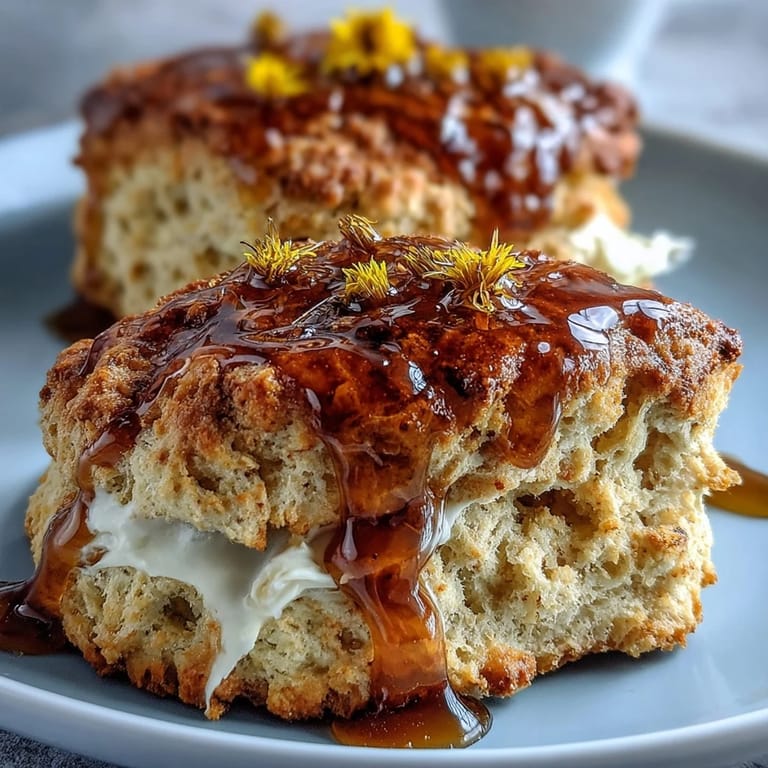
- Remove from the oven and while still warm, drizzle with honey and scatter the remaining dandelion petals on top so they stick.
- Serve at the perfect moment:
- Warm scones with generous dollops of clotted cream are breakfast magic—eat them within an hour if you can.
 Save
Save There's a moment when you plate a warm scone, add a cloud of clotted cream, and see someone's face light up with that mix of surprise and recognition—that's when food stops being just breakfast. With these scones, it's like you've given someone permission to see their own yard differently, to notice the small beautiful things they've been walking past.
Sourcing Your Dandelion Petals
The dandelion hunt is half the fun, honestly. Walk around your neighborhood in late spring and look for yards that are clearly untreated—no sign of recent lawn chemicals, no fertilizer smell lingering. Pick flowers that are fully open and bright yellow, preferably in the late morning after the dew dries but before the afternoon heat wilts them. I've learned to bring a small paper bag and gently pluck the petals at home over a bowl, discarding the green sepals and the bitter white parts underneath. Fresh is best, and they'll stay perfect for a day in the fridge if you must prepare them ahead.
The Clotted Cream Difference
Real clotted cream is thick, slightly tangy, and absolutely worth seeking out if you can find it—look in the British section of specialty grocery stores or order it online. That richness against the delicate sweetness of the scone and honey is exactly why these work so well. If you truly can't find it, whipped cream is lighter and still lovely, and mascarpone adds an unexpected creaminess that's genuinely delicious if slightly different from traditional British style.
Making These Your Own
Once you nail the basic technique, you can play around with different edible flowers—violets, rose petals, or even lavender all work beautifully. The honey can be swapped for maple syrup if you prefer, and some people add lemon zest to brighten the dandelion flavor. I've also made a batch with cardamom added to the dry ingredients, which gave them a subtle spiced warmth that paired surprisingly well with the floral notes.
- Experiment with different honey varieties once you're comfortable—wildflower, orange blossom, or acacia each bring their own subtle notes.
- These freeze beautifully for up to two weeks; reheat them gently wrapped in foil to restore their tenderness.
- A light sparkling wine or floral white tea is the perfect partner to serve alongside, echoing the dandelion's delicate flavor.
 Save
Save These scones have become my answer to the question of what to do with spring when it arrives—a way to celebrate the small things in life that often get overlooked. Serve them warm with good cream and watch someone you care about discover that dandelions belong on the breakfast table.
Recipe Questions & Answers
- → What type of dandelion petals should be used?
Use only fresh, pesticide-free yellow dandelion petals. Avoid green parts as they can be bitter.
- → Can I substitute clotted cream?
Yes, whipped cream or mascarpone are great alternatives if clotted cream is unavailable.
- → How do I ensure scones turn out tender?
Cut cold butter into the dry ingredients until coarse crumbs form and mix wet and dry ingredients gently without overmixing.
- → What is the ideal baking temperature and time?
Bake at 400°F (200°C) for 16–18 minutes until scones are golden and puffed.
- → How should scones be served?
Serve warm with a drizzle of honey, extra dandelion petals, and generous dollops of clotted cream.