 Save
Save My grandmother's kitchen always smelled like butter and vanilla when she was testing a new dessert, and buttermilk pie was her quiet masterpiece—the kind of dessert that doesn't announce itself with chocolate or fancy toppings, but wins you over with its subtle tang and silky custard center. The first time I watched her make it, I was struck by how simple the ingredient list was, how it seemed almost too easy for something so delicious. She'd hum while whisking the filling, never rushing, letting each egg incorporate fully before moving on. That patience, I'd learn, made all the difference.
I made this pie for the first time alone on a Wednesday evening after a rough day at work, needing something to do with my hands and my mind. The kitchen filled with that warm, vanilla-nutmeg smell while it baked, and by the time it came out of the oven with its golden top, I'd somehow shifted from frustrated to hopeful. My neighbor knocked on the door an hour later asking what smelled so good, and we ended up sitting on the porch with two forks and one pie, talking until sunset.
Ingredients
- Unbaked 9-inch pie crust: Use homemade if you're feeling ambitious, but honestly, a quality store-bought crust holds its own and frees you up for what matters—the filling itself.
- Granulated sugar and all-purpose flour: These two create the base that will turn liquid into that signature custardy texture as it bakes; don't skip whisking them together first.
- Unsalted butter, melted and cooled: The melting matters because warm butter cooks the eggs, and cooled butter means you maintain control of that silky texture.
- Large eggs: These are your binder and richness; room temperature eggs mix in more smoothly, though it's not critical here.
- Buttermilk: This is the soul of the pie, giving you that tangy note that makes people ask what's in it; don't substitute with regular milk and lemon juice if you can help it.
- Lemon juice: A tablespoon brightens everything without making the pie taste citrusy; it's the quiet note that makes you go in for another bite.
- Vanilla extract and ground nutmeg: Vanilla rounds out the sweetness while nutmeg adds a whisper of warmth—these spices are what make it taste like home rather than like a basic custard.
- Salt: Even in dessert, a pinch of salt is your friend, bringing all the flavors into focus.
Tired of Takeout? 🥡
Get 10 meals you can make faster than delivery arrives. Seriously.
One email. No spam. Unsubscribe anytime.
Instructions
- Preheat and prep:
- Heat your oven to 350°F and let it come to temperature while you settle the pie crust into your dish. Crimping the edges not only looks nice but gives you something to anchor the filling so it doesn't slump.
- Build the filling base:
- Whisk the sugar and flour together in a large bowl—this prevents lumps and helps the sugar dissolve evenly. Once that's combined, add the cooled melted butter and stir until you have something that looks like wet sand.
- Incorporate the eggs:
- Add your eggs one at a time, whisking after each addition so you get a smooth, ribbon-like batter. Rushing this step might seem faster, but spreading out the eggs prevents any raw egg taste and gives you that silky texture.
- Finish the filling:
- Pour in the buttermilk, lemon juice, vanilla, nutmeg, and salt, stirring gently until everything is just combined. Don't overmix at this point; you want everything integrated, not aerated.
- Bake until set:
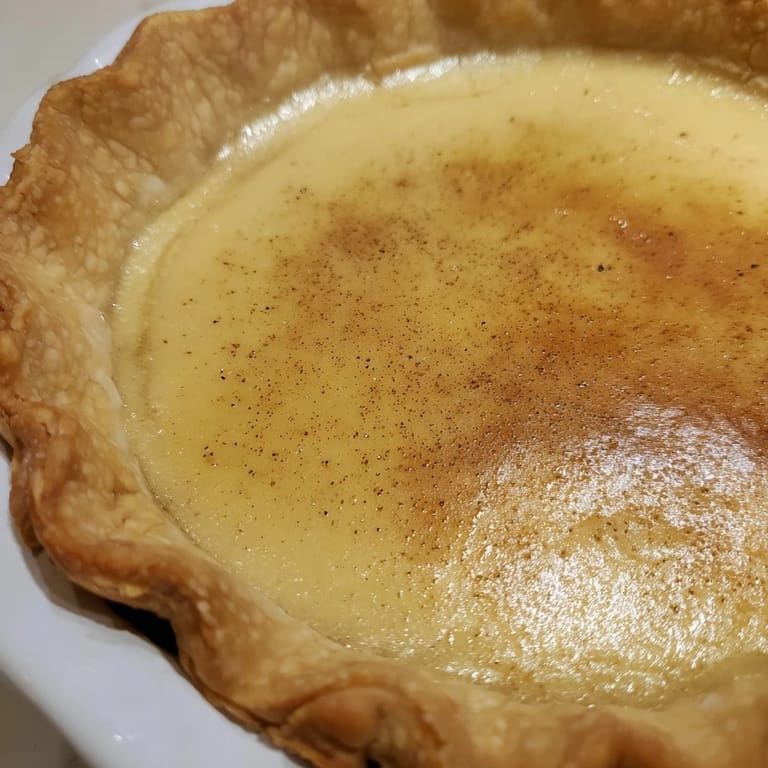
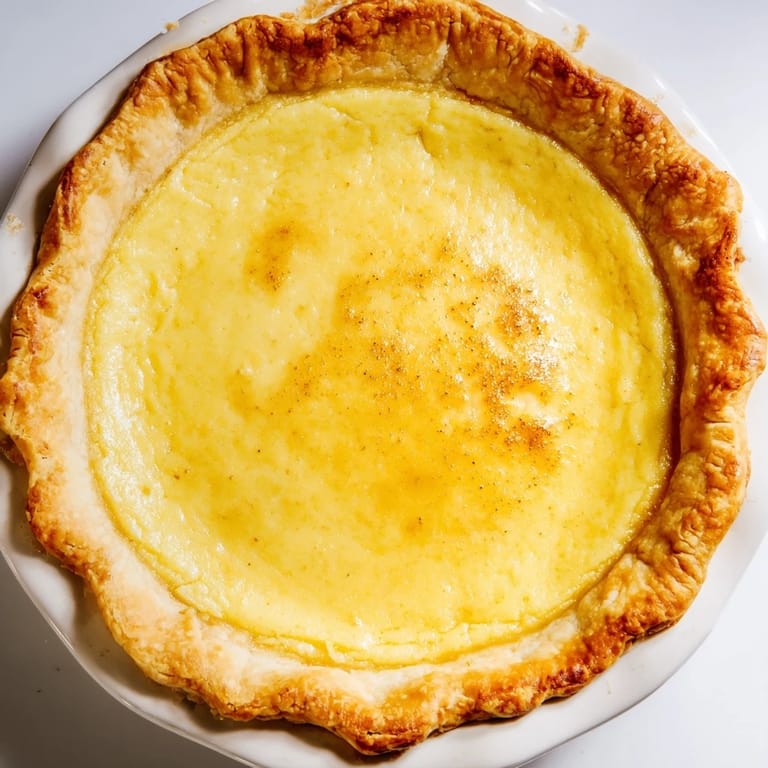
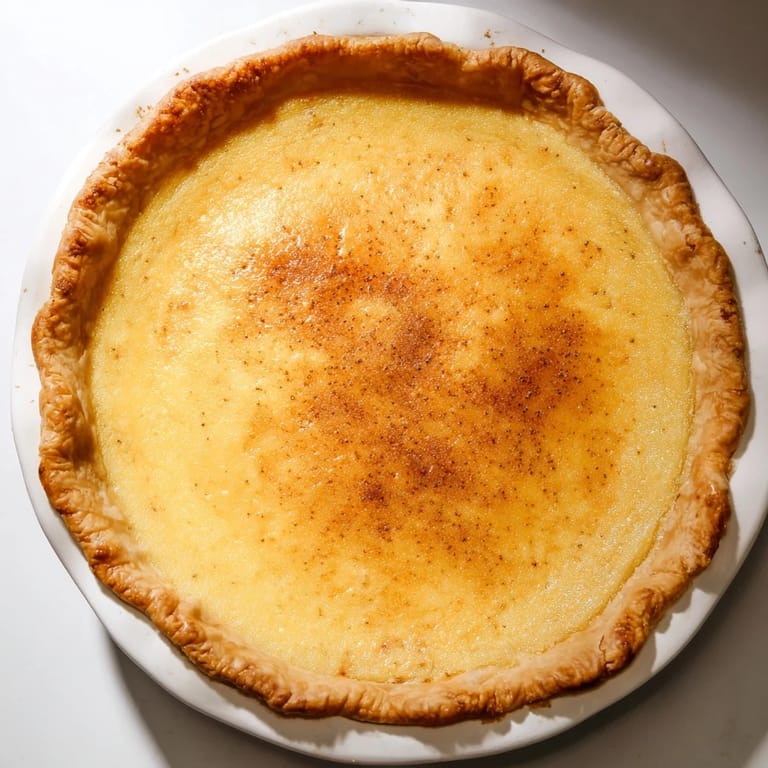
- Pour the filling into your crust and slide it into the oven; after about 40 to 50 minutes, the edges should be set and the center should jiggle just slightly when you shake the pan gently. The top will be a light golden brown, and your kitchen will smell incredible.
- Cool with patience:
- Let the pie cool all the way on a wire rack before slicing—this is where restraint pays off because a warm pie will slice into puddles, but a cooled one will give you clean, pretty wedges. Serve it at room temperature or chilled, depending on your mood.
 Save
Save What surprised me most about this pie was how it became the thing people asked me to bring, even though I'd never claimed to be a baker. It's the kind of dessert that sneaks up on you—not flashy, but somehow unforgettable. I think that's because every slice carries that moment of comfort, that taste of something made with care rather than complexity.
Why This Pie Works
Buttermilk pie exists in that sweet spot between a traditional custard tart and a chess pie, taking the best parts of both. The buttermilk adds a subtle sour note that balances the sweetness, while the nutmeg and vanilla keep it warm and familiar. There's no complicated technique, no finicky tempering or folding—just honest ingredients that transform in the oven into something that tastes like it took hours to perfect.
Serving Suggestions
This pie is wonderful on its own, but a dollop of whipped cream or a handful of fresh berries can elevate it depending on the season. In summer, I love it chilled with berries; in winter, it's perfect at room temperature with a cup of strong coffee. The custard filling is rich enough that you don't need much, and a small slice satisfies completely.
Storage and Make-Ahead Tips
Leftover pie keeps beautifully in the refrigerator for up to three days, covered loosely with plastic wrap so the crust doesn't get soggy. You can also bake the pie a day ahead, letting it cool completely before covering it, which takes the pressure off if you're serving it for company. If you want extra tang and don't mind a more assertive flavor, add up to 2 tablespoons additional lemon juice to the filling—I've done this when I'm feeling bold, and it's never disappointed.
- For a deeper spice aroma, sprinkle a touch of extra nutmeg on top of the filling just before baking.
- Use a pie shield or loosely tent with foil if the top is browning too quickly during baking.
- Serve chilled if the pie seems too soft, or at room temperature if you prefer a sliceable but still creamy texture.
 Save
Save This pie has become my answer when someone asks what comfort tastes like. It's simple, reliable, and impossible to mess up if you follow one rule: patience with the cooling.
Recipe Questions & Answers
- → What gives the filling its tangy flavor?
Buttermilk and lemon juice combine to provide a distinct tang while balancing the sweetness of the sugar.
- → How can I make the crust flakier?
Use cold butter or shortening and avoid overworking the dough to keep the crust tender and flaky.
- → Can I add extra spice to the filling?
Yes, adding a little more nutmeg or a pinch of cinnamon enhances the warm spice notes without overpowering the custard.
- → What is the best way to tell when the filling is done?
The center should be set but slightly jiggly, and the top will be lightly golden when fully baked.
- → How should I store leftovers?
Wrap tightly and refrigerate. It keeps well for up to three days, maintaining flavor and texture.